

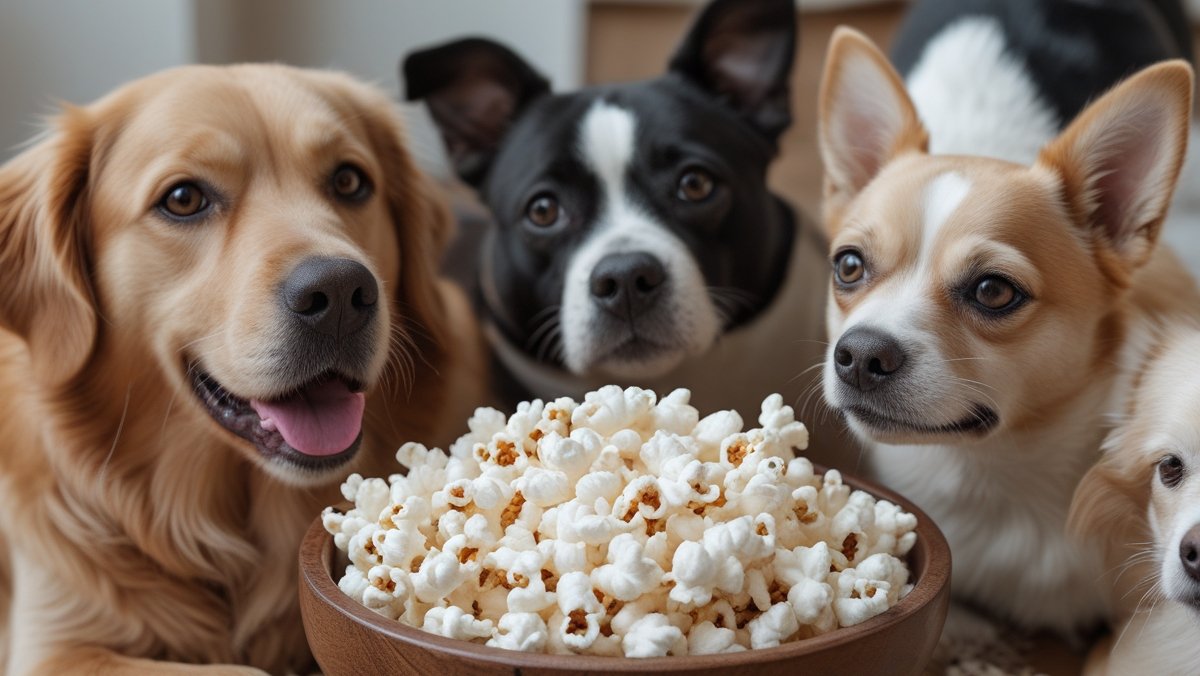
Can dogs eat popcorn? YES, dogs can safely eat popcorn in moderation, but only if it's plain and air-popped. Popcorn is not toxic for dogs and contains some beneficial nutrients. However, the way it's typically prepared for humans—with butter, oil, salt, and other toppings—can cause significant health problems for dogs.
✅ Can dogs eat popcorn? YES
Key Points:
- Safety Status: Safe – Plain, air-popped popcorn without any additives is safe for dogs in small quantities.
- Best Format: Air-popped, completely plain, with no butter, oil, salt, sugar, or other toppings. Ensure all kernels are fully popped.
- Serving Size: A few pieces for small dogs, a small handful for medium to large dogs.
- Frequency: As an occasional treat, not a regular part of their diet.
- Main Benefit: Provides fiber, which aids digestion, and contains minerals like magnesium and phosphorus.
- Main Risk: Unpopped or partially popped kernels are a choking hazard. Toppings like butter, oil, and salt can lead to digestive upset and pancreatitis.
Table of Contents
- Quick Answer Summary
- Nutritional Benefits of Popcorn for Dogs
- Potential Risks and Safety Concerns
- Safe Serving Methods and Portion Guidelines
- Different Formats: What’s Safe vs Dangerous
- Signs of Adverse Reactions
- Veterinary Recommendations
- Alternative Safe Treats
- Bottom Line
- Can dogs eat popcorn? FAQs
Nutritional Benefits of Popcorn for Dogs
Plain, air-popped popcorn offers several health advantages when it becomes part of their occasional treat routine. This simple snack is more than just a crunchy bite; it contains nutrients that can support your dog’s overall health. When prepared correctly, it can be a low-calorie option compared to many commercial dog treats.Primary Nutritional Benefits:
- Fiber: Popcorn is a whole grain, which means it is a good source of dietary fiber. Fiber is essential for maintaining a healthy digestive system in dogs. It helps promote regular bowel movements and can aid in preventing constipation. A well-functioning digestive tract is crucial for nutrient absorption and overall well-being.
- Magnesium: This mineral plays a vital role in muscle function and nerve transmission. It also helps in maintaining a normal heart rhythm and supports a healthy immune system. Including magnesium-rich foods can contribute to your dog’s energy production at a cellular level.
- Phosphorus: Working alongside calcium, phosphorus is fundamental for building and maintaining strong bones and teeth. It is also involved in how the body uses fats and carbohydrates for energy. Adequate phosphorus levels are important for kidney function and cell repair.
- Low in Fat and Sugar: When served plain, popcorn is naturally low in fat and sugar. This makes it a healthier treat option than many alternatives that are loaded with sweeteners and fats, which can contribute to weight gain and other health issues.
- Antioxidants: Popcorn contains polyphenols, a type of antioxidant that helps protect the body against damage from free radicals. These antioxidants can help reduce inflammation and may lower the risk of certain diseases.
Caloric Information:
A cup of plain, air-popped popcorn contains approximately 30 calories. This low-calorie count makes it an excellent choice for a light snack that won’t significantly impact your dog’s daily caloric intake. For weight management, offering low-calorie treats like plain popcorn can help prevent obesity, a common and serious health problem in dogs. It’s a satisfying, crunchy treat without the heavy caloric load.Potential Risks and Safety Concerns
While the answer to “Can dogs eat popcorn?” is yes, there are important considerations and potential risks to be aware of before sharing this snack with your furry friend. The main dangers come not from the popcorn itself, but from how it is prepared and the additives used.⚠️ Primary Concerns:
Choking Hazard and Dental Issues:
Unpopped or partially popped kernels pose a significant choking risk, especially for smaller dogs or dogs who eat their food quickly without chewing properly. These hard kernels can easily become lodged in a dog’s throat. Furthermore, kernels can get stuck between a dog’s teeth, leading to discomfort, gum disease, or even a cracked tooth. It is crucial to sift through the popcorn and remove all unpopped kernels before offering any to your pet.Digestive System Problems:
- High Fat Content: Popcorn prepared with oil, butter, or margarine is high in fat. A high-fat diet can cause gastrointestinal upset in dogs, including symptoms like vomiting and diarrhea. In more severe cases, consuming rich, fatty foods can trigger pancreatitis, a painful and potentially life-threatening inflammation of the pancreas.
- Excessive Sodium: Salt and salty seasonings are common popcorn toppings. Too much sodium is harmful to dogs and can lead to sodium ion poisoning. Signs of excessive salt intake include extreme thirst, frequent urination, vomiting, and diarrhea. In severe cases, it can cause tremors, seizures, and damage to the kidneys.
- Artificial Sweeteners: Some popcorn, like kettle corn or caramel corn, contains sugar. Even worse, some low-calorie popcorn products may use artificial sweeteners like xylitol. Xylitol is extremely toxic to dogs and can cause a rapid drop in blood sugar, seizures, and liver failure.
Toppings and Seasonings:
Many other toppings that humans enjoy on popcorn are not safe for dogs. Garlic powder and onion powder are toxic to dogs, causing damage to their red blood cells. Some cheeses and other dairy products can also cause digestive issues for lactose-intolerant dogs. The safest approach is always to offer popcorn that is completely plain. Always monitor your dog after introducing any new food to ensure they do not have an adverse reaction.Safe Serving Methods and Portion Guidelines
When considering if dogs can eat popcorn, proper preparation and portioning are crucial for their safety. Serving this treat correctly ensures your dog can enjoy the crunchy goodness without the associated risks.Preparation Methods:
- Air-Popping: This is the best and safest method for making popcorn for your dog. Use an air popper that uses hot air instead of oil to pop the kernels. This method results in plain, low-calorie popcorn without any harmful fats.
- Stovetop (Without Oil): You can make popcorn on the stovetop in a covered pot. Keep the heat on medium and shake the pot constantly to prevent burning. Do not add any oil or butter to the pot. Let the steam escape to keep the popcorn crispy.
- Microwave (Plain Kernels): If you use a microwave, place plain kernels in a paper bag and fold the top over a few times. Do not use pre-packaged microwave popcorn, as it is loaded with butter, oil, and salt. Cook until the popping slows to a few seconds between pops.
- Cool and Inspect: Regardless of the method, allow the popcorn to cool completely before serving it to your dog. Carefully sort through the popped pieces and remove all unpopped or partially popped kernels to prevent choking or dental damage.
Serving Size Guidelines:
Treats should only make up about 10% of your dog’s daily diet. Popcorn is a treat, not a meal replacement.| Pet Size | Serving Amount | Frequency |
|---|---|---|
| Small (under 20 lbs) | A few pieces (up to 1/4 cup) | Occasionally |
| Medium (20-50 lbs) | A small handful (up to 1/2 cup) | Occasionally |
| Large (over 50 lbs) | A handful (up to 1 cup) | Occasionally |
Different Formats: What’s Safe vs. Dangerous
Understanding if dogs can eat popcorn requires looking at its different preparations. How popcorn is made and what is added to it determines whether it is a safe snack or a dangerous food for your pet.✅ SAFE FORMATS:
- Plain, Air-Popped Popcorn: This is the gold standard for canine consumption. It contains no added oils, fats, salt, or sugar. It’s a simple, whole-grain snack that is low in calories and safe in moderation.
- Plain, Stovetop-Popped Popcorn: As long as it is cooked without any oil or butter, stovetop popcorn is also safe. The key is the absence of additives.
❌ AVOID THESE FORMATS:
- Microwave Bag Popcorn: Commercially available microwave popcorn is packed with high levels of salt, butter, oils, and sometimes artificial flavorings like diacetyl, which can be harmful. These ingredients can lead to digestive upset, pancreatitis, or sodium poisoning.
- Caramel Corn or Kettle Corn: These sweet versions are loaded with sugar, which is unhealthy for dogs. Excess sugar can lead to weight gain, dental problems, and diabetes. Some sugar-free versions may contain xylitol, which is highly toxic to dogs.
- Buttered or Oiled Popcorn: Whether from a movie theater or made at home, popcorn with butter, margarine, or oil is too high in fat for dogs. This can cause severe gastrointestinal distress and pancreatitis.
- Cheese Popcorn: The artificial flavorings and high salt content in cheese-flavored popcorn make it a poor choice. Additionally, many dogs are lactose intolerant, and the dairy could cause stomach upset.
- Popcorn with Seasonings: Avoid any popcorn with added seasonings. Many spices can be irritating to a dog’s stomach, and some, like onion and garlic powder, are toxic.
🟡 MODERATE CAUTION:
- Popcorn Kernels: While the popped part is safe, the unpopped kernels are a major hazard. They are hard, difficult to digest, and can cause choking or dental damage. Always remove them before serving.
Signs of Adverse Reactions
Monitor your dog after introducing popcorn as a new treat. Even plain, air-popped popcorn can cause issues for some dogs, especially those with sensitive stomachs. Watch for any signs of discomfort or illness.Immediate Signs (within 24 hours):
- Vomiting
- Diarrhea or loose stools
- Lethargy or weakness
- Loss of appetite
- Abdominal pain or discomfort (your dog may look at its stomach, whine, or be reluctant to move)
Allergic Reaction Symptoms:
While an allergy to corn is not extremely common, it can occur. Symptoms of an allergic reaction may include:- Itchy skin, excessive scratching, or hives
- Swelling of the face, ears, lips, or eyelids
- Chronic ear infections
- Difficulty breathing (an emergency symptom requiring immediate veterinary care)
What to Do:
- Stop Giving Popcorn: If you notice any of these signs, the first step is to stop feeding your dog popcorn immediately.
- Provide Water: Ensure your dog has access to plenty of fresh water to stay hydrated, especially if they are experiencing vomiting or diarrhea.
- Monitor Closely: Keep a close watch on your dog’s symptoms. Mild digestive upset may resolve on its own within a day.
- Contact Your Veterinarian: If symptoms are severe, persist for more than 24 hours, or if you suspect an allergic reaction, contact your veterinarian right away. For signs of severe distress like difficulty breathing or collapse, seek emergency veterinary care immediately. The ASPCA Animal Poison Control Center is also a valuable resource.
Veterinary Recommendations
Professional guidance on whether dogs can eat popcorn is generally consistent among veterinarians. The consensus is that plain, air-popped popcorn is a safe treat in moderation, but the risks associated with common additives cannot be ignored.Dr. Jerry Klein, Chief Veterinary Officer for the American Kennel Club (AKC), states, "Plain, air-popped popcorn is safe for dogs to eat in small quantities. But, popcorn that is prepared with oil, butter, salt, or other toppings is not safe for your dog on a regular basis." This highlights the critical importance of preparation.
When to Consult Your Vet:
It is always a good idea to speak with your veterinarian before introducing new foods into your dog’s diet. This is especially true if your dog has certain health conditions:- Weight Issues: If your dog is overweight or obese, your vet can help you determine an appropriate treat allowance to avoid sabotaging weight management efforts.
- Diabetes: While plain popcorn is low in sugar, it is a carbohydrate. Your vet can advise if it’s a suitable treat for a diabetic dog and how it might impact their blood sugar levels.
- Allergies: If your dog has a known grain allergy or a history of food sensitivities, it’s best to avoid popcorn or discuss it with your vet first.
- Pancreatitis History: Dogs with a history of pancreatitis must be on a strict low-fat diet. Any deviation, even with a seemingly harmless treat, should be approved by a veterinarian.
- Dental Problems: If your dog has sensitive teeth or a history of dental issues, the hardness of even fully popped corn could be a concern.
Veterinary Consensus:
The overall professional recommendation is one of caution and moderation. Vets agree that the biggest dangers lie in the toppings. The high fat and sodium content of human-style popcorn can lead to serious health issues. Unpopped kernels present a universal choking and dental risk. Therefore, the advice is clear: if you choose to share popcorn, it must be air-popped, plain, and served in small quantities as an occasional treat after removing all kernels.Alternative Safe Treats
If the strict rules for serving popcorn make you nervous, or if your dog simply doesn’t like it, there are many other healthy and safe alternatives to consider. These options provide nutritional benefits without the risks associated with improper popcorn preparation.Similar Safe Crunchy Snacks:
- Baby Carrots: These are crunchy, low in calories, and great for a dog’s teeth. They are also a good source of Vitamin A.
- Apple Slices: A fantastic source of vitamins A and C, as well as fiber. Be sure to remove the core and seeds, as the seeds contain cyanide.
- Green Beans: Whether fresh or frozen, green beans are a crunchy, low-calorie snack packed with important vitamins and minerals.
- Celery Sticks: Celery is a great source of fiber and vitamins, and its crunchiness can help clean a dog’s teeth.
Other Healthy Options:
- Blueberries: A superfood for dogs, rich in antioxidants that support the immune system.
- Cubed Watermelon: A hydrating treat that’s low in calories and high in vitamins A and C. Remove the rind and seeds.
- Small Pieces of Cooked Sweet Potato: A great source of dietary fiber, vitamin B6, and vitamin C.
- Commercial Dental Chews: There are many commercially available chews designed to be both a tasty treat and beneficial for your dog’s dental health.
Bottom Line
Can dogs eat popcorn? **Yes, but only in its purest form.** The safety of this snack is entirely dependent on its preparation. Plain, air-popped popcorn, free of any salt, butter, oil, or sugar, can be a perfectly acceptable and enjoyable treat for most dogs when given in moderation.Key Takeaways:
- ✅ Plain is Safe: Always serve air-popped, unseasoned, and unsalted popcorn.
- ✅ Kernel-Free is Key: Meticulously remove all unpopped or partially popped kernels to prevent choking and dental damage.
- ✅ Toppings are Toxic: Butter, oil, salt, and sugar can cause serious health problems, from digestive upset to pancreatitis.
- ✅ Portion Control Matters: Popcorn should be an occasional treat, not a regular part of their diet.
- ✅ Consult Your Vet: If your dog has underlying health issues, check with your veterinarian before offering popcorn.
Can dogs eat popcorn? FAQs
Is popcorn safe for dogs to eat?
Yes, popcorn is safe for dogs to eat, but only if it is plain and air-popped. You should never give your dog popcorn that has been prepared with butter, oil, salt, or other toppings, as these additives can cause digestive upset and more serious health issues like pancreatitis. Always make sure to remove any unpopped kernels before sharing, as they can be a choking hazard.
How many pieces of popcorn can I give my dog?
The amount of popcorn you can give your dog depends on their size. For a small dog, a few pieces are a sufficient treat. A medium to large dog can have a small handful. Popcorn should be considered an occasional treat and not make up a significant portion of their diet. As a general rule, treats should not exceed 10% of your dog’s daily caloric intake.
Can dogs eat sweet and salty popcorn?
No, dogs should not eat sweet or salty popcorn. Popcorn with high levels of salt can lead to sodium ion poisoning, which can cause vomiting, diarrhea, and seizures. Sweet popcorn, like caramel corn, is high in sugar and can contribute to weight gain, dental issues, and diabetes. Some sugar-free versions may contain xylitol, which is extremely toxic to dogs.
Why does my dog love popcorn so much?
Dogs are often drawn to popcorn for the same reasons humans are: its crunchy texture and satisfying sound. The smell of popcorn, especially if it’s being made for humans with butter, is also very appealing to them. They may also associate the snack with a fun, shared experience, like watching a movie with their family, which strengthens their desire for it.


[…] Can Dogs Eat Popcorn? Yes! Safe Feeding Guide 2025 […]